On the evening of January 20, 2026, a handful of Hollis residents stood up at a Planning Board meeting to talk about vegetables. One woman said she had been a member of the local CSA since it started. A man drove over from Amherst just to say his family still buys their produce from the same organic farm every summer. Someone mentioned the "Right To Farm Community" sign posted at the town line.
The item on the agenda that night was a two-lot subdivision at 106 Witches Spring Road. On paper, it looked routine. In practice, it was the clearest window available into how land actually moves, or fails to move, in Hollis.
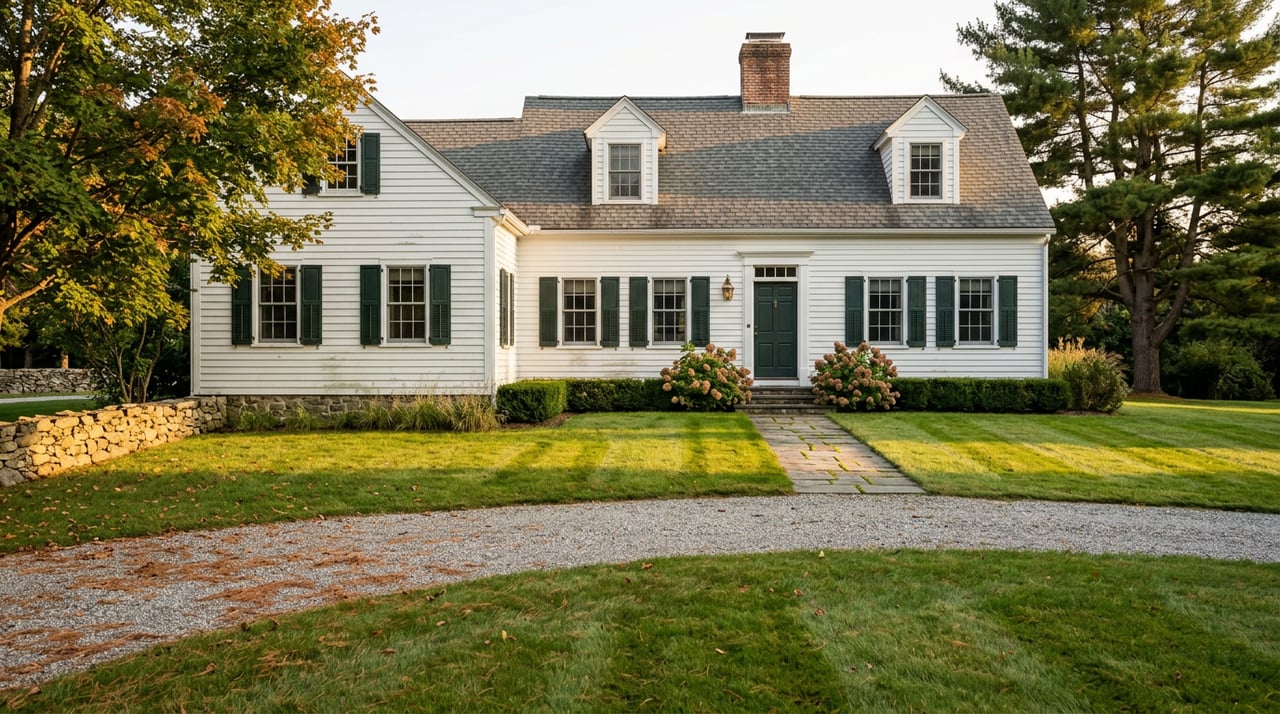
The parcel belonged to Gerald and Marie Glover. The applicant was Begin Family Farm, a full-time organic operation looking to expand. The subdivision didn't create new house lots or open a cul-de-sac. It did one specific thing: it split the Glovers' farmhouse and barns away from the surrounding farmland, so that land could be sold to the Begins while the Glovers kept their home. Jeff Begin told the board his family intended to permanently relocate and expand the farm business onto the property. A longtime CSA customer in the audience noted that the timing mattered because of the coming farm season.
That maneuver, house on one side of a property line and salable land on the other, is not a coincidence of paperwork. It is the direct result of a New Hampshire tax law from 1973, and it explains a lot about why Hollis listings stay scarce and why raw land here rarely feels cheap even when the town itself feels rural.
The Law Doing the Heavy Lifting
New Hampshire's Current Use program, established under RSA 79-A, lets landowners have qualifying acreage assessed on its productive capacity as forest, farm, or open land rather than at market value. To qualify, a parcel generally needs at least 10 acres of forest, farmland, or otherwise unproductive land, and structures, driveways, and other improvements don't count toward that acreage. More than half of all land in New Hampshire is currently enrolled this way.
The incentive is straightforward. A landowner sitting on twenty or thirty wooded acres pays a small fraction of what a full market-value assessment would demand, as long as the land stays undeveloped. Hollis's Assessing Office administers this locally, and the town's own current-use materials confirm the same core rule that applies statewide.
The catch shows up the moment that land actually gets sold for development. New Hampshire calls this the Land Use Change Tax, and it is where the friction lives. According to a New Hampshire title company's closing guide, when land in current use is sold to be developed, the town has up to eighteen months to determine the exact penalty owed, and the cost typically falls on the seller, though buyer and seller can negotiate how it gets paid. Because the final number isn't known at closing, at least one New Hampshire title company handles this by holding back roughly 10 percent of the seller's proceeds in escrow until the town issues its bill, refunding any overage once the final figure comes in. Practices can vary by closing attorney, but the underlying problem is the same everywhere: the exact tax due is unknown on the day everyone signs.
Read that again from a buyer's seat. If you're purchasing a large parcel where part of the land sits in current use, you may be negotiating around a tax bill that literally does not exist yet on closing day. That is not a detail most portal listings mention, and it is exactly the kind of thing worth asking your attorney about before you write an offer on anything described as "acreage" in Hollis.
What Thin Supply Does to the Price of Dirt
As of early August 2026, Hollis home listings were clustering around a median list price in the mid-$800,000s to just under $900,000, with roughly two dozen active listings and price per square foot somewhere in the high $200s to low $300s depending on which week's snapshot you catch. That is a normal, if tight, suburban market on its face.
Raw land tells a stranger story. Land-only listings in Hollis have recently averaged somewhere between roughly $150,000 and $200,000 per acre for larger parcels, and undeveloped, smaller buildable lots have priced closer to $300,000 per acre. Hollis's own zoning ordinance requires a minimum of two acres per dwelling unit in several residential districts, and the town's subdivision checklist separately requires at least an acre and a half of contiguous buildable land per new lot, or one acre under the town's open space development option.
Do that math and a curious pattern appears. Two acres of raw, unimproved Hollis land, before a single shovel of construction, can already price close to what a finished, move-in-ready home costs on the same street. The discount buyers usually expect from building instead of buying doesn't show up here, because so little land actually converts from current use into buildable inventory in any given year. Supply isn't just tight. It's structurally reluctant to become supply at all.
At a glance
| Land in Current Use | Land sold for development | |
|---|---|---|
| Assessed on | Productive capacity (forest, farm, open land) | Full market value |
| Minimum acreage | 10+ acres | No minimum once developed |
| Penalty triggered | None, while enrolled | Land Use Change Tax, set within 18 months |
| Who typically pays | N/A | Seller, unless negotiated otherwise |
| Closing practice | N/A | Often 10% of proceeds escrowed pending final bill |
Two More Cases Still Waiting on the Same Math
The Witches Spring Road case moved relatively fast because it was small and narrowly framed. Two larger proposals sitting in front of the same Planning Board show how much slower things go when a project actually tries to add meaningful housing stock.
One is a proposal from Raisanen Homes Elite to develop three lots totaling 36.084 acres on Silver Lake Road into a 40-unit housing-for-older-persons condominium community. The file number, PB2022-015, tells its own story: this application predates the year on the calendar by a wide margin, and as of this writing it has been continued from meeting to meeting across January, February, March, and into April 2026, with the board pushing it forward one continuance at a time rather than closing it out.
The other is a 35-home subdivision from the same developer, connecting Deacon Lane to Proctor Hill Road along Route 130. That file has followed the same rhythm, continued from February into March and again from March into April 2026, with board discussion circling back to traffic data, driveway configuration, and sight-distance concerns raised by neighbors on the affected roads.
Neither project is small. Neither is stalled by lack of professional backing. Both are simply moving at the pace Hollis moves at when raw acreage tries to become subdivided lots. If you're comparing Hollis to a neighboring town and wondering why new listings don't show up the way they might elsewhere, this is a fair part of the answer. It isn't that nobody wants to build here. It's that building here, structurally and procedurally, takes a while.
What This Means If You're Looking at a Big Lot
If a property you're considering comes with more acreage than the house itself seems to need, a few questions are worth asking before you get attached to the number on the listing:
- Is any portion of this land currently enrolled in Current Use, and how many acres?
- If you plan to build, subdivide, or add structures beyond the existing footprint, will that trigger a Land Use Change Tax, and who is expected to pay it?
- Has the seller's attorney indicated whether proceeds will be escrowed at closing pending the town's final penalty determination?
- If the land stays in Current Use after your purchase, are you comfortable with the restrictions that come with keeping it that way?
None of this makes a large Hollis lot a bad idea. It makes it a different kind of purchase than a comparable lot in a town with looser land-use incentives, and worth pricing accordingly.
A Few Common Questions
Does Current Use ever expire on its own? No. Land stays in Current Use until a disqualifying event occurs, such as development or a change that no longer meets the criteria. Owners can also change categories annually with written notice to the assessing office.
Can a buyer keep land enrolled in Current Use after closing? Generally yes, if the land continues to meet the acreage and use requirements. The tax penalty applies specifically when land is developed or otherwise removed from qualifying use, not simply when ownership changes hands.
Who actually calculates the Land Use Change Tax bill? The town's assessing office, working within the timeline set by state law, which allows up to eighteen months from the change in use to finalize the amount owed.
If you're weighing a move to Hollis, or trying to figure out whether a big-acreage listing is the deal it looks like on paper, this is exactly the kind of local mechanics worth walking through with someone who watches these Planning Board files as they happen. Vis Realty International has spent more than 25 years reading Southern New Hampshire town by town, tax law by tax law. Schedule a Consultation and let's look at what a specific property's acreage actually means for your plans, before you're the one waiting on a Land Use Change Tax bill.