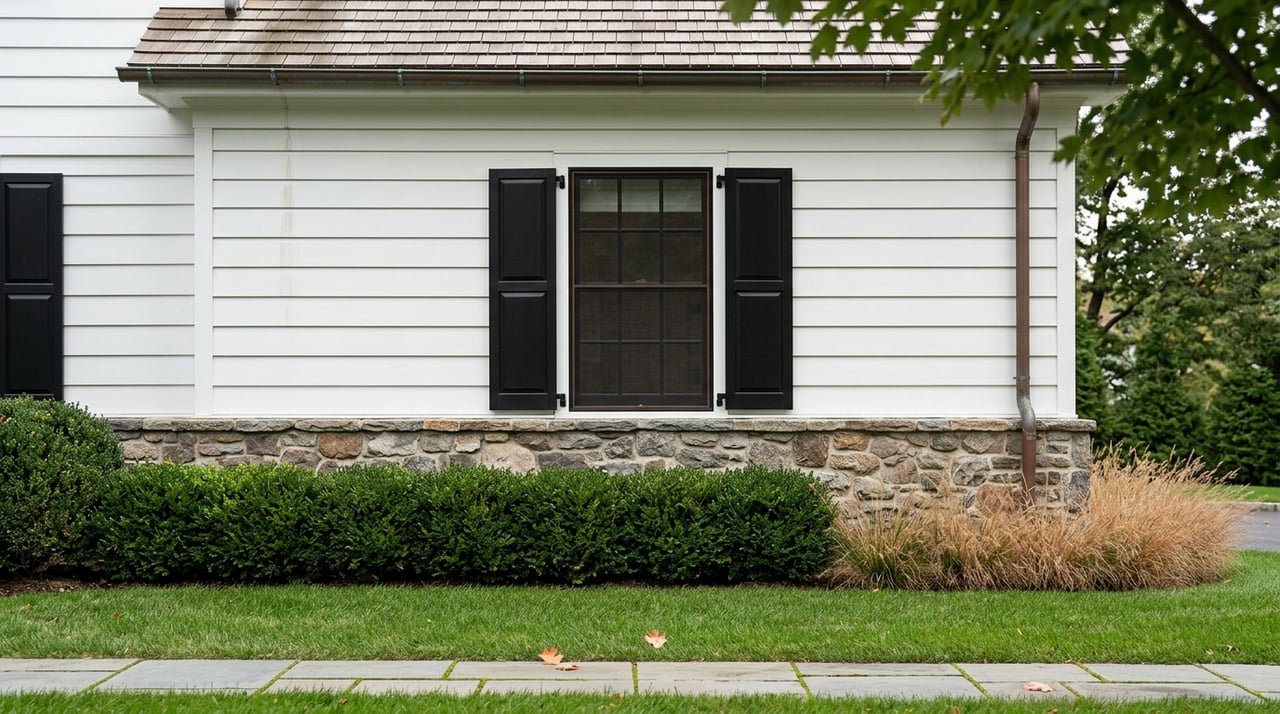
A four-bedroom colonial in Hollis and a three-bedroom septic system can be the exact same house. Nobody lied on the listing. The finished room over the garage really does have a closet and a window that meets egress code. But somewhere in a file cabinet at the Hollis Building Department, or on a permit issued decades before anyone digitized anything, there's a number that doesn't care what the listing says. That number is what the state actually approved the property to support, and it's the one your lender will ask about.
This is not a Hollis quirk invented to scare buyers. It's how New Hampshire designs wastewater rules for a town where nearly every home outside the village center runs on a private well and a private septic system rather than municipal service. Once you understand how that number gets set, and how easily it can drift away from what's on a real estate listing, you'll know exactly what to check before you write an offer here, and why the current market gives you more room to check it than buyers had a year ago.
The Number That Actually Governs
New Hampshire doesn't size a septic system by square footage or bathroom count. It sizes it by bedrooms. The state's Department of Environmental Services designs and approves every individual sewage disposal system around anticipated daily water use, and bedrooms are the proxy for that. A three-bedroom approval assumes a certain number of people, a certain number of flushes, a certain load on the tank and the leach field. Turn the den into a fourth bedroom without touching the septic paperwork, and you haven't added a bedroom in any legal sense. You've overloaded a system that was never sized for it.
Hollis makes this concrete in a way a lot of towns don't bother to. The town's own building permit application has a line item for bedroom count sitting right next to the septic design sign-off, so the two numbers are tied together on the same page before a permit is ever issued. If you're touring a home with a bonus room, a finished walkout, or a converted office that shows up as a bedroom in the listing photos, that room's legal status runs through a septic file, not through what the seller's agent calls it in the description.
Where the Mismatch Actually Comes From
Most mismatches aren't fraud. They're age. A colonial built in the 1970s or 80s, expanded in the 90s, and refreshed again in the 2010s can have three separate septic-adjacent decisions layered on top of each other, and only one of them may have made it into a searchable state record. NHDES's own online portal for septic system files, called Subsurface OneStop, currently covers records from 1967 to 1986 and from 2016 to the present. Everything approved between 1986 and 2016 is still being digitized. If your Hollis house falls in that gap, the state's website won't hand you a clean answer. Someone has to go pull the paper file, either at the town or at NHDES directly.
Accessory dwelling units add another layer. Hollis's zoning ordinance allows ADUs, but it requires the septic system to be certified as capable of handling the additional load, and if it isn't, it has to be upgraded before the ADU is legal. A charming in-law suite that predates that certification is a real asset with an unresolved paperwork problem attached to it.
Why This Surfaces During Financing, Not During Showings
Here's the part that catches buyers off guard. Nothing about a bedroom-count mismatch necessarily shows up when you walk the house. It shows up when your loan officer starts asking for documentation. USDA loans and NH Housing loans require a passing septic inspection as a condition of the loan. FHA and VA loans require one if the appraisal flags a possible issue. A private lender might not ask at all until an appraiser notes something odd about the room count relative to the septic design on file.
The state's own pre-purchase guidance is direct about what buyers should be doing during their inspection window:
Before finalizing a purchase, confirm that the bedroom count on the property's septic Construction and Operational Approvals actually matches what's in the real estate listing. If the two don't line up, find out why before contingencies expire.
That's not a suggestion buried in fine print. It's the first thing NHDES tells prospective buyers to check, right alongside asking whether the tank has been pumped on a normal schedule. The reason it matters so much in Hollis specifically is that so much of the town's housing stock predates current digital recordkeeping, which means the gap between "what the listing says" and "what the file says" is more likely to exist here than in a town built out entirely after 2016.
What a Mismatch Actually Costs
A downsized or unresolved septic approval isn't usually a reason to walk away from a house you love. It's a negotiation. Statewide guidance from New Hampshire's environmental agency puts full septic replacement in the range of fifteen to thirty thousand dollars, which is real money but rarely the whole story. Often the fix is a corrected permit application, a design update from a licensed septic designer, or in some cases confirmation that the original system was actually engineered with more capacity than the current bedroom count uses, which means no physical work is needed at all. You don't know which situation you're in until someone pulls the file and compares it to the room the seller is calling a bedroom.
It's also worth knowing that New Hampshire's septic rules are not frozen in place. A 2024 change to state law shifted responsibility for waterfront septic evaluations from seller to buyer, a reminder that these rules get revisited and that assuming last decade's process is still this year's process is its own risk. Whatever your Hollis purchase involves, verify the current requirement rather than the one a friend mentioned from their own closing a few years back.
What This Means If You're Touring Homes in Hollis Right Now
The timing actually favors doing this homework properly. Over the three months ending in June 2026, homes in the Hollis 03049 area sold at a median price near $932,000, up roughly 8.4 percent from the same period a year earlier, but they're sitting on the market for about 35 days on average, compared with roughly 15 days a year ago. A year ago, with homes moving in two weeks, plenty of buyers felt pressured to waive contingencies rather than wait on a records request. At today's pace, there's genuinely more room to ask the Hollis Building Department for the septic file, request the NHDES Construction and Operational Approvals, and get an answer before your inspection period runs out.
This is exactly the kind of local paperwork trail where having someone who already knows which office to call, and how long that office typically takes to respond, saves real time inside a contingency window. It's not a glamorous part of buying a home in Hollis. It's also the part that determines whether the fourth bedroom you fell in love with is actually yours to use that way.
Before You Write an Offer on a Hollis Home
- Ask for the septic Construction and Operational Approvals and check that the bedroom count matches the listing
- Find out when the system was last pumped and ask to see maintenance records
- If the home was built or renovated between 1986 and 2016, expect that you may need to request a paper file rather than finding it online
- If there's an ADU or a converted bonus room being marketed as a bedroom, confirm whether the septic system was ever recertified for it
- Pair the septic check with a private well test, since most Hollis properties outside the village center run on private wells and the same inspection window is the natural time to test for arsenic and other bedrock-related contaminants
A Few Questions Worth Asking
Does New Hampshire require a septic inspection before every home sale? No. There's no statewide mandate for a standard sale. Waterfront properties within 250 feet of qualifying water bodies are the exception, where a licensed evaluation is legally required. For everything else, it becomes a practical requirement once financing enters the picture.
What if the septic file for a Hollis home predates digital records? You or your agent can request the paper file directly from the Hollis Building Department or from NHDES. It takes longer than a database search, but the answer exists somewhere on paper.
Is well water tested at the same time as the septic system? Typically yes. Both usually happen during the same inspection window, since arsenic and other bedrock-related contaminants are common enough in this part of New Hampshire that most buyers test for them alongside the septic and general home inspection.
Buying or selling in Hollis means dealing with a town where the paperwork behind the well and the septic system carries as much weight as the paint color or the kitchen layout. If you're weighing a purchase here, or trying to figure out what a home's septic history actually says before you make an offer, Vis Realty International can help you sort through it before it becomes a financing surprise. Schedule a consultation and let's look at the file together before you fall in love with a number that isn't yours yet.