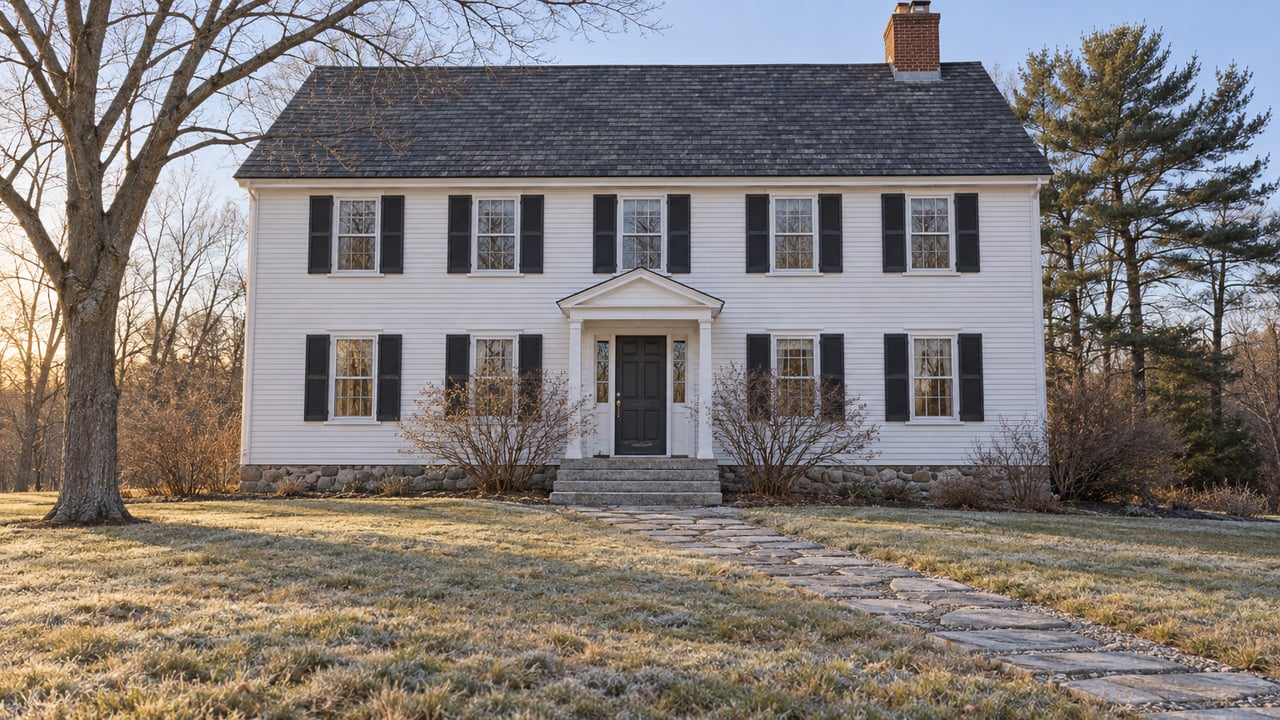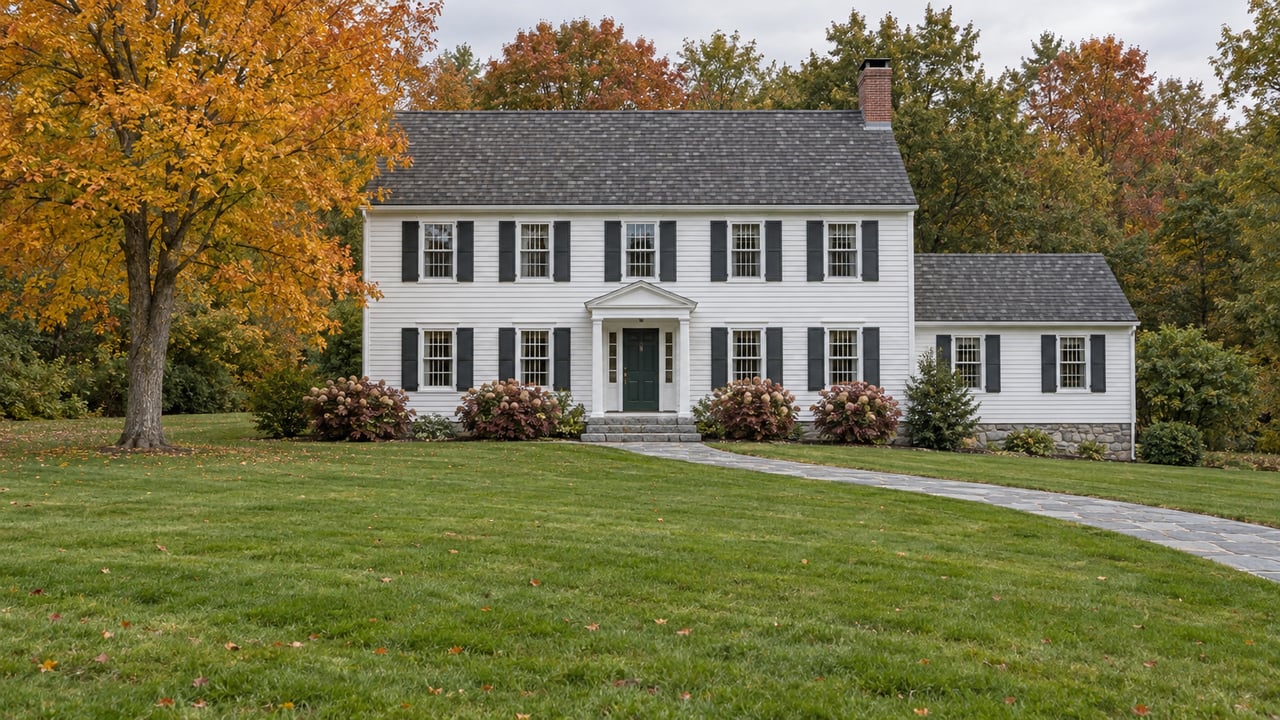
What does a Bedford home cost to own this year? If you're comparing Bedford with nearby towns this fall, the annual tax figure on a listing sheet is probably the most solid-looking number you have. It's also the one most likely to be out of date. That figure almost always comes from the 2025 bill, which was calculated from a 2025 assessment at a 2025 rate, and Bedford replaced both of those this year.
The headline sounds like good news. On October 22, 2026, Town Manager Rick Sawyer reported to the Town Council that the 2026 tax rate was set at $14.73 per $1,000 of assessed value, down from $16.49, a drop of $1.76 or 10.67%. Every component fell. The town portion went from $3.87 to $3.38, the county from $1.02 to $0.94, the local school portion from $10.45 to $9.45, and the state education portion from $1.15 to $0.96. The town expects those bills to be due December 1.
For most single-family owners, though, the rate is only half the calculation, and it's the smaller half this year.
The rate fell because the base grew
Bedford completed a revaluation in 2026, three years after the last one in 2023. The Union Leader reported that the town's gross total valuation rose $1.314 billion, or 20.54%, to $7.7 billion. Sawyer told councilors that setting the rate takes in everything approved at Town Meeting in March, the revaluation, and other items, and that the New Hampshire Department of Revenue Administration sets municipal rates.
When the base a town taxes gets about a fifth bigger, the rate needed to raise the money falls. The town warned residents about exactly this back in August. The August 12, 2026 Council minutes say, in so many words, "Don't multiply your new assessment by the current tax rate!" The opposite mistake is just as easy, and the October announcement makes it tempting. Applying the new, lower rate to last year's assessment understates the bill for most owners.
The break-even sits at about 12%
The rate fell by a factor that produces a clean threshold. $16.49 divided by $14.73 is about 1.12. Any property whose assessment rose by less than roughly 12% in the revaluation gets a smaller tax bill for 2026. A property that rose by more gets a larger one, before exemptions, credits, or changes specific to that property.
The typical Bedford house rose well past that line. The median single-family assessed value went from $678,400 in 2025 to $807,500 in 2026, according to the Union Leader. The paper called that an 18% increase. The two figures it printed work out to about 19%.
Applying each year's rate to each year's median value gives an illustrative bill:
- 2025: $678,400 at $16.49 per $1,000 comes to about $11,187
- 2026: $807,500 at $14.73 per $1,000 comes to about $11,894
That's roughly $707 more, or about 6.3%, on the median single-family home. The town hasn't published a forecast for a typical bill. This is simply the arithmetic on the two published medians and the two published rates.
Which homes cross the line depends on what kind of house it is
A town-wide median hides how unevenly the revaluation landed. Chief Assessor Doug Irvine told councilors that antique-style homes rose 30%, ranches 26%, and Capes 20%, as the Union Leader reported. Put each of those through the same 12% threshold and the picture changes a lot:
| Category, 2026 revaluation | Reported value change | Approximate change in tax bill at the new rate |
|---|---|---|
| Antique-style homes | +30% | about +16% |
| Ranch homes | +26% | about +13% |
| Cape Cod homes | +20% | about +7% |
| Residential overall | +18% | about +5% |
| Professional office space | +23% | about +10% |
| Restaurants | +16% | about +4% |
| Commercial overall, per August minutes | +12% | roughly flat |
The last row matters for anyone who remembers the debate over who carries Bedford's tax load. The August minutes record residential values up 18% over three years and commercial up 12%, a much smaller gap than the town saw three years earlier. Residential property already makes up more than 80% of Bedford's valuation, with commercial under 12% and industrial at 3.53%, across 8,367 parcels. When homes appreciate faster than commercial property, a slightly larger share of the same rate falls on houses.
In the same Council session, Irvine added that commercial was "up considerably compared to where it was in 2023." Medical and professional offices led the categories he named. So the bill impact varies within commercial property too, just as it does among homes.
Same street, different revaluation
Style is only one fault line. Irvine said Bedford has about a dozen traditional neighborhoods, with median sale prices running from $527,500 at the low end to nearly $2 million at the high end. He also told the Council that a single street can contain two markets. He used Barrington Drive as the example:
"There's an old phase portion of that street and then there's the newer phase and it's very obvious. You see it in the types of homes that are built in the older section, they are older homes, they're smaller. Then you get into the point at which it becomes more of a parkway, a boulevard with a grass and tree strip in the middle and becomes more distinctly higher-end."
That passage appears in the Union Leader's September 10 coverage. For a buyer, the point is simple. Two homes in the same subdivision can show similar 2025 tax figures and very different 2026 bills, depending on how each property's style and section moved in the revaluation.
Reworking the tax figure on a listing you're considering
Bedford's assessment database, hosted by Vision Government Solutions, displays 2026 assessments and notes that preliminary values were mailed to owners the week of August 3, 2026. That gives a buyer three steps to a far more realistic carrying-cost estimate than the listing sheet offers:
- Look up the property's 2026 assessed value in the town's database.
- Multiply it by $14.73 and divide by 1,000.
- Compare the result with the "annual taxes" figure on the listing. A gap of several hundred dollars on a home near the median is normal this year, and the gap is usually larger on antique-style homes and ranches.
A 2026 assessment is a starting point, not a forecast of future bills. Vice Chair Gail Levesque asked whether assessments reflect market value. Irvine replied that "the goal has always been 100% of market value," and added, "Next year, if the market goes up three or four percent, well, our assessments are low," according to the Union Leader. For context, in the 2025 ratio study the state put Bedford's median assessment-to-sales ratio at 86.5%, the gap that a revaluation closes.
The calendar for owners who question a new value
The informal review window for this revaluation has already passed. Assessment hearing notices went out August 4, and hearings ran from August 17 to August 21, 2026. The formal route opens once the final bill arrives.
The New Hampshire Board of Tax and Land Appeals describes a sequence. The taxpayer first files an abatement application with the municipality. If the "Notice of Tax," meaning the date the town mails the final tax bill, falls on or before December 31, that application is due March 1. If the bill goes out later, the deadline is two months after the notice. The town then has until July 1 to decide in the on-or-before-December-31 case. An appeal can go to the BTLA or to Superior Court, but not both. The BTLA's abatement application states that filing does not pause collection. Taxes are paid as assessed, with a refund and interest if an abatement is granted, and a disproportionality claim should document market value as of April 1. The NH Department of Revenue Administration keeps an overview of the same process.
Consider this general information rather than legal or tax advice. If you're weighing an abatement, confirm your deadlines and your case with the town's assessing office or a qualified tax professional.
A few questions worth asking
Did Bedford spend less this year because the rate fell? Not necessarily. The rate reflects the March Town Meeting approvals, the revaluation and other items, all combined. A lower rate on a base that's 20.54% larger doesn't mean the town, county or school budgets got smaller.
My assessment rose about 10%. Will my bill go down? Under the 2026 rate, an assessment increase below roughly 12% generally means a smaller bill than 2025, before any exemptions or credits that apply to you.
Will the next listing I see show the new tax figure? Many won't until 2026 bills are mailed and recorded. The quickest check is the property's 2026 assessment multiplied by $14.73 per $1,000.
Is the revaluation over for good? This one is finished. Bedford revalued in 2023 and again in 2026, and the assessor has said that assessments start to lag again as soon as the market moves.
If you're working out what a particular Bedford address will cost to carry, or what the 2026 assessment on your home means for your listing price and a buyer's math, Marianna Vis Realtor can go through the numbers with you, address by address. Schedule a Consultation, and we'll start with the assessment card and go from there.